
Lung disease is managed by measurement. Asthma, Cystic Fibrosis and other respiratory conditions all call for regular lung-function checks — and a single reading means little unless it can be compared with the last one.
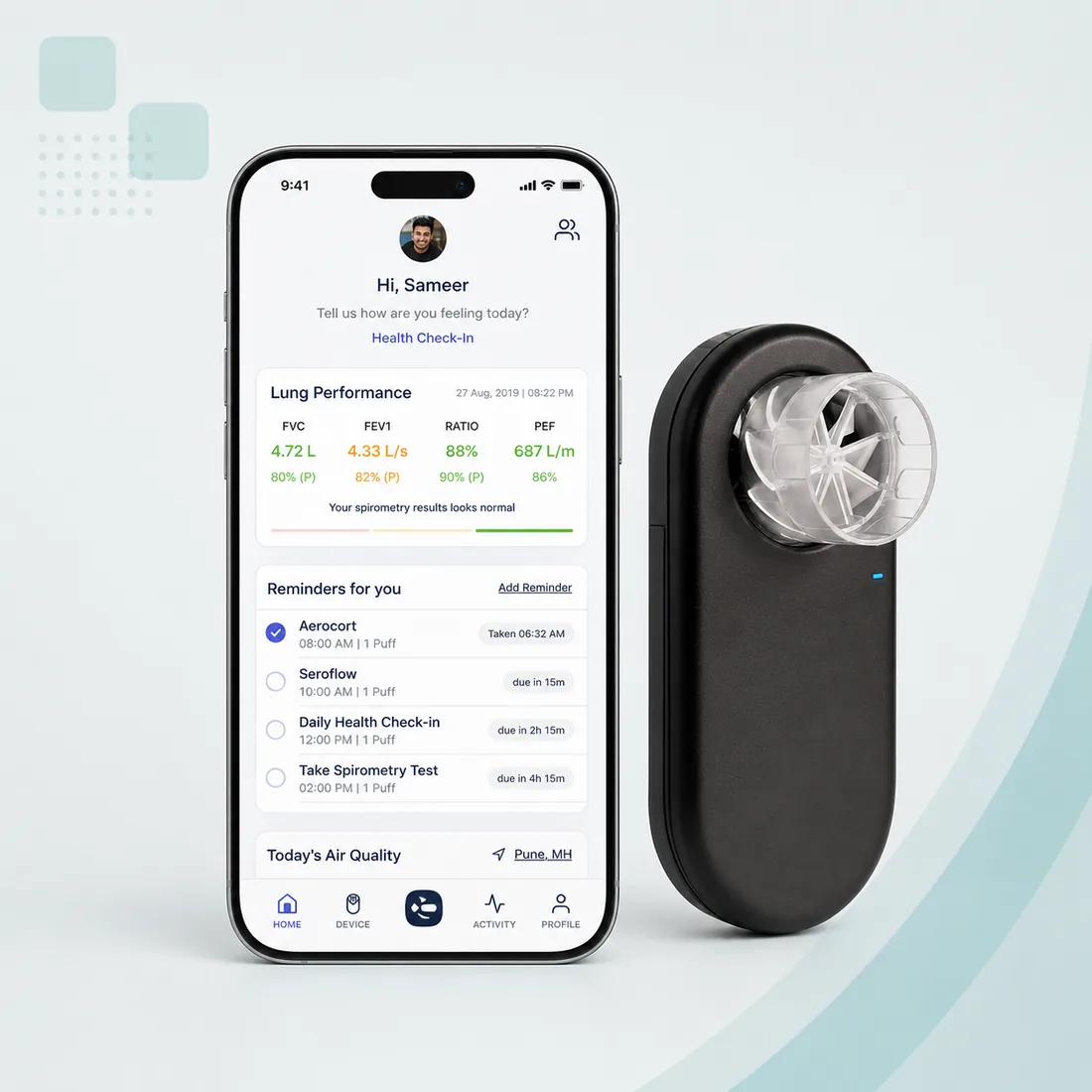
The spirometer at a ClinicWala e-clinic measures peak flow and FEV1 in real time, with pulse oximetry built into the same device. It serves patients from 5 to 93 years old, and every result saves to the ClinicWala health record for the doctor to read against the trend.
What the device does
Peak flow and FEV1
The two standard lung-function values, measured in real time and shown immediately on a connected smartphone or tablet.
Built-in pulse oximetry
The same device measures how much of the blood’s haemoglobin is carrying oxygen — a value as important as blood pressure.
Ages 5 to 93
One instrument covers children, adults and the elderly alike.
Bluetooth to the record
Results transfer wirelessly, save to the patient’s ClinicWala record, and can be shared with the consulting doctor.
Pocket-sized, standards-compliant
Fits in a pocket, is simple to operate, and is ATS/ERS 2019 compatible.
Why it matters
A guide for respiratory care
Spirometry shows whether the respiratory system is working normally — the key measurement for tracking asthma, Cystic Fibrosis and other lung diseases, for preventive care, and for athletic training.
An early oxygen warning
Pulse oximetry measures the oxygen saturation in the blood; a level below 95% is a warning sign that calls for immediate medical attention.