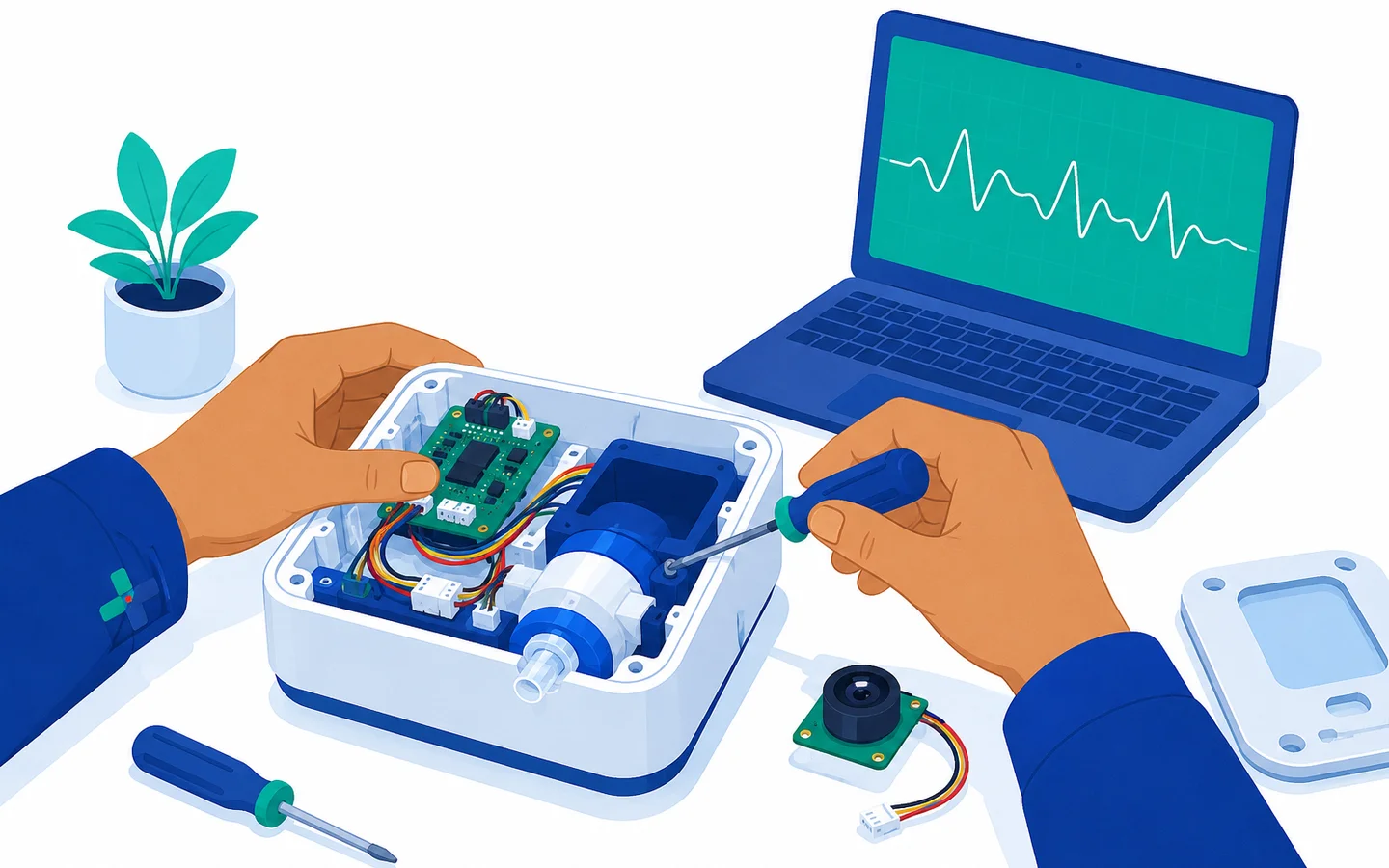
Alongside the clinics, pharmacies and camps, Medical Network Pvt. Ltd. runs a research and development programme in digital health: five active initiatives, each aimed at the communities conventional healthcare reaches last.
Everything on this page is research in progress, not a shipped product. It is where the network is going.
A digital twin for patients
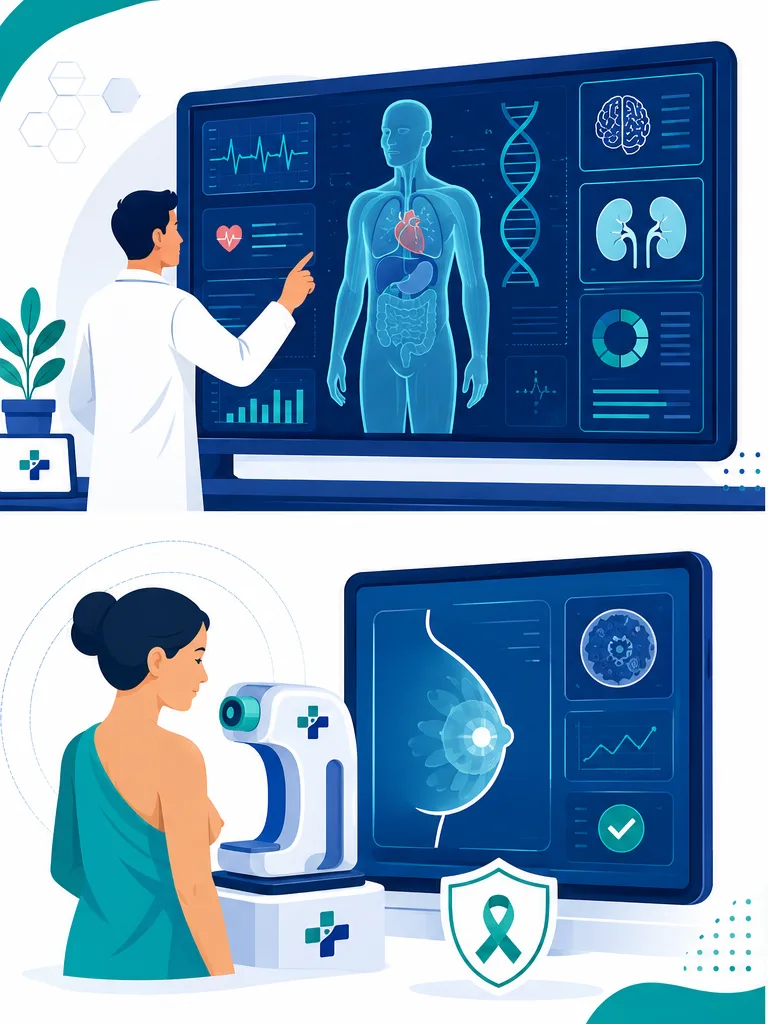
Medical Network Pvt. Ltd. is running advanced R&D in digital twin technology to transform personalised healthcare in India. A digital twin is a dynamic, virtual replica of an individual patient that continuously mirrors their health status — integrating real-time physiological data, medical history, laboratory investigations, diagnostic imaging, wearable-device information, genomics where available, lifestyle parameters and environmental influences.
The aim is an intelligent digital representation of every patient that evolves through their lifetime. The virtual model lets physicians simulate disease progression, evaluate treatment options, predict health risks and refine clinical decisions before intervening in the real world.
The platform draws on IoT-enabled medical devices, electronic health records, telemedicine consultations, pathology reports, pharmacy records and remote patient monitoring. AI, machine learning and predictive analytics continuously analyse patient-specific data to spot early warning signs, forecast disease trajectories and support precision medicine.
We believe digital twins shift healthcare from reactive treatment to proactive, predictive, preventive and personalised care — giving clinicians, hospitals, governments, researchers and patients decision-support tools that improve outcomes and reduce costs at scale.
Early detection of chronic kidney disease
Chronic kidney disease (CKD) is one of the fastest-growing public health challenges in India, particularly in rural, tribal and underserved communities where nephrologists, diagnostic facilities and regular screening are scarce. In many regions patients stay undiagnosed until the disease is advanced — with high morbidity, mortality and healthcare cost.
Medical Network Pvt. Ltd. is researching an AI-powered CKD prediction and early-warning system, designed to identify people at risk before irreversible kidney damage occurs. It builds a comprehensive risk profile from multimodal data: demographics, medical history, vital signs from IoT-enabled devices, pathology and biochemistry reports, radiology findings, medication history, diet, lifestyle and community health indicators.
Clinical decision-support algorithms continuously evaluate risk, detect subtle clinical patterns and generate personalised risk scores and early alerts — helping frontline health workers, primary-care physicians, telemedicine providers and specialists catch CKD at its earliest, most treatable stage.
The research includes a multilingual interface built for villages, Health and Wellness Centres, PHCs, mobile medical units and telemedicine networks. The long-term vision is a scalable population-health platform for early screening, timely referral, longitudinal monitoring and community-level surveillance — making preventive kidney care accessible to every community in India.
Affordable breast-cancer screening
Breast cancer is among the most common cancers affecting women in India and a leading cause of cancer death. A large share of cases is diagnosed late — limited awareness, thin screening infrastructure and the cost of conventional technologies like mammography, especially in rural, tribal and underserved regions. Caught early, breast cancer has substantially better treatment outcomes and survival rates.
Medical Network Pvt. Ltd. is conducting R&D on an affordable, AI-enabled breast-cancer screening system built for resource-constrained settings: portable, non-invasive and cost-effective enough to deploy in primary health centres, mobile medical units, community health programmes and telemedicine networks.
The research combines sensing technologies based on multiple physical-wave modalities with AI and machine learning, analysing signals alongside clinical information, patient history, symptoms and demographic factors to support risk assessment. The goal is widespread, affordable screening for women who currently have little access to conventional diagnostics — identifying those who may need further evaluation and getting them referred in time.
Intelligent malnutrition assessment
Malnutrition remains one of the most significant public health challenges affecting children in India, particularly in rural, tribal and underserved communities. Large-scale nutrition screening depends on manual measurement — mid-upper arm circumference (MUAC), height, weight, age verification — which is slow, error-prone and hard to run consistently across campaigns involving thousands of children.
Medical Network Pvt. Ltd. is researching an AI-powered malnutrition assessment system that automates child growth assessment and nutritional risk evaluation. It combines computer vision, mobile applications, IoT-enabled devices and child health data to automate the collection and analysis of MUAC, height, weight, age, growth indicators, dietary history and clinical symptoms.
A multilingual, user-friendly interface is being built for Anganwadi workers, ASHAs, ANMs, school health teams, NGOs and government health programmes — cutting dependence on manual measurement and paper records, improving screening consistency and data quality, and enabling real-time reporting and population-level nutritional surveillance across India.
From research to the field
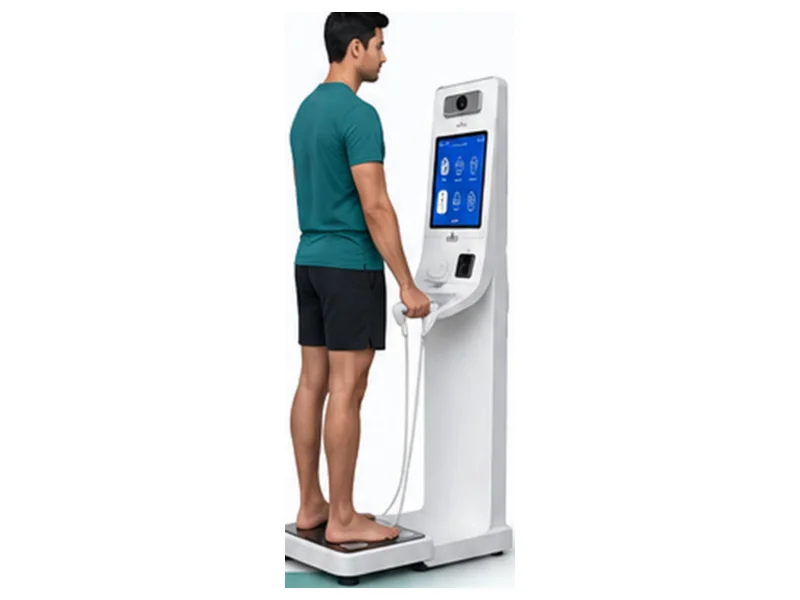
The nutrition programme has already put an instrument to work: an AI-powered malnutrition assessment device for adult anthropometric screening now travels with the network’s kiosks and camps. The child-growth system described above remains research in progress.
See the malnutrition assessment deviceAn AI-powered fundus camera
Medical Network Pvt. Ltd. is researching an affordable AI-powered retinal and eye-imaging camera using innovative optical and computational imaging techniques. The goal is a portable, high-precision, low-cost device for early screening of retinal and eye diseases, particularly in rural and underserved communities.
By pairing the imaging with artificial intelligence, the system aims to help health professionals identify people who may need further ophthalmic evaluation — improving access to timely eye care and reducing preventable vision loss across India.
Bringing healthcare to where people live
The research only matters if it arrives. This technology is built for the places conventional healthcare reaches last: villages, Health and Wellness Centres, PHCs, mobile medical units, community health programmes, mining-affected areas and other underserved locations.
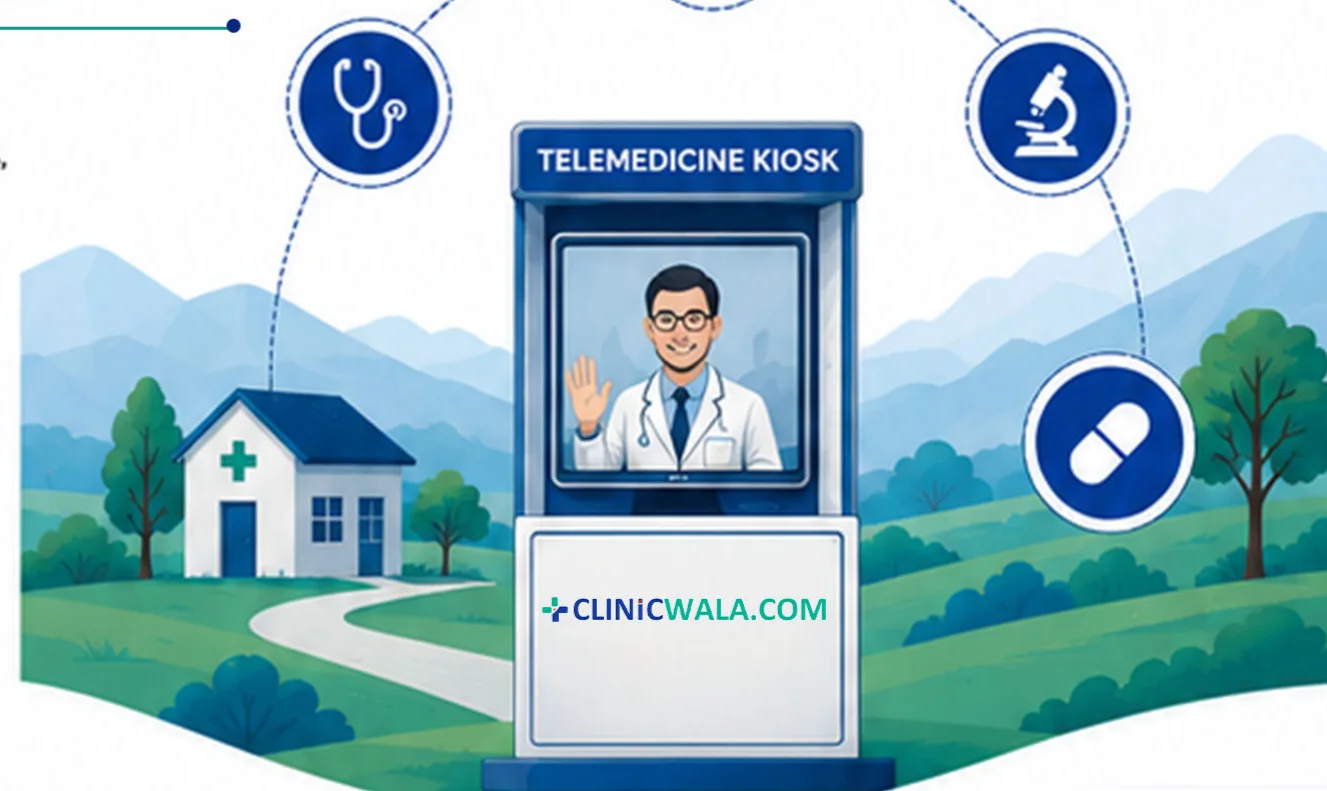
Through telemedicine kiosks, e-clinics and mobile healthcare models, the network connects those communities to doctors, diagnostics and digital health infrastructure — without asking a patient to travel a long distance first.
That makes it a model others can build on: government departments, hospitals, CSR programmes, NGOs, public-sector organisations and healthcare institutions all deploy the same machinery through their own programmes.
The last mile, in practice
-
Villages and health centres
Health and Wellness Centres, PHCs and village centres get screening and a doctor without a journey to the district town.
-
Mobile and community programmes
Mobile medical units and community health programmes carry the same kit and write to the same record.
-
Mining-affected districts
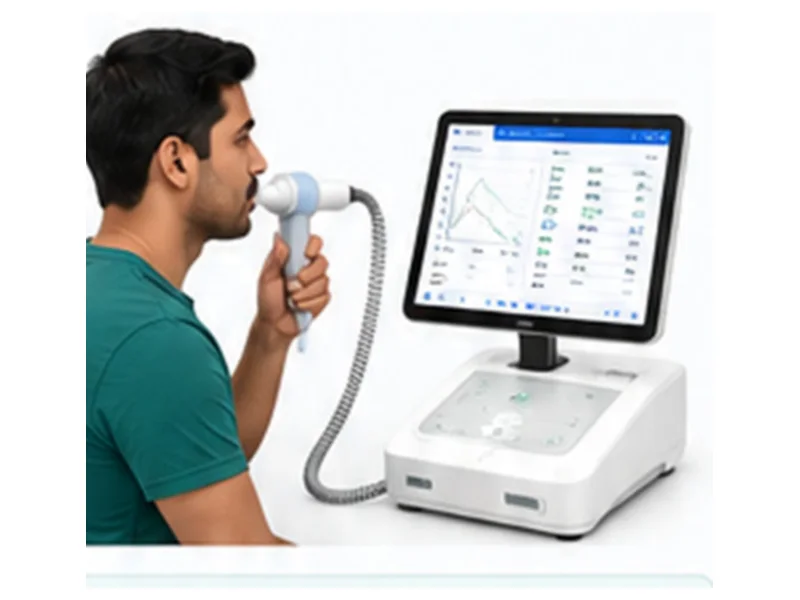
Occupational screening — lungs, heart, hearing — where the exposure actually is.
Our vision
We are committed to building intelligent healthcare technologies that make preventive, predictive, personalised and accessible care a reality for every patient in India.
Talk to us