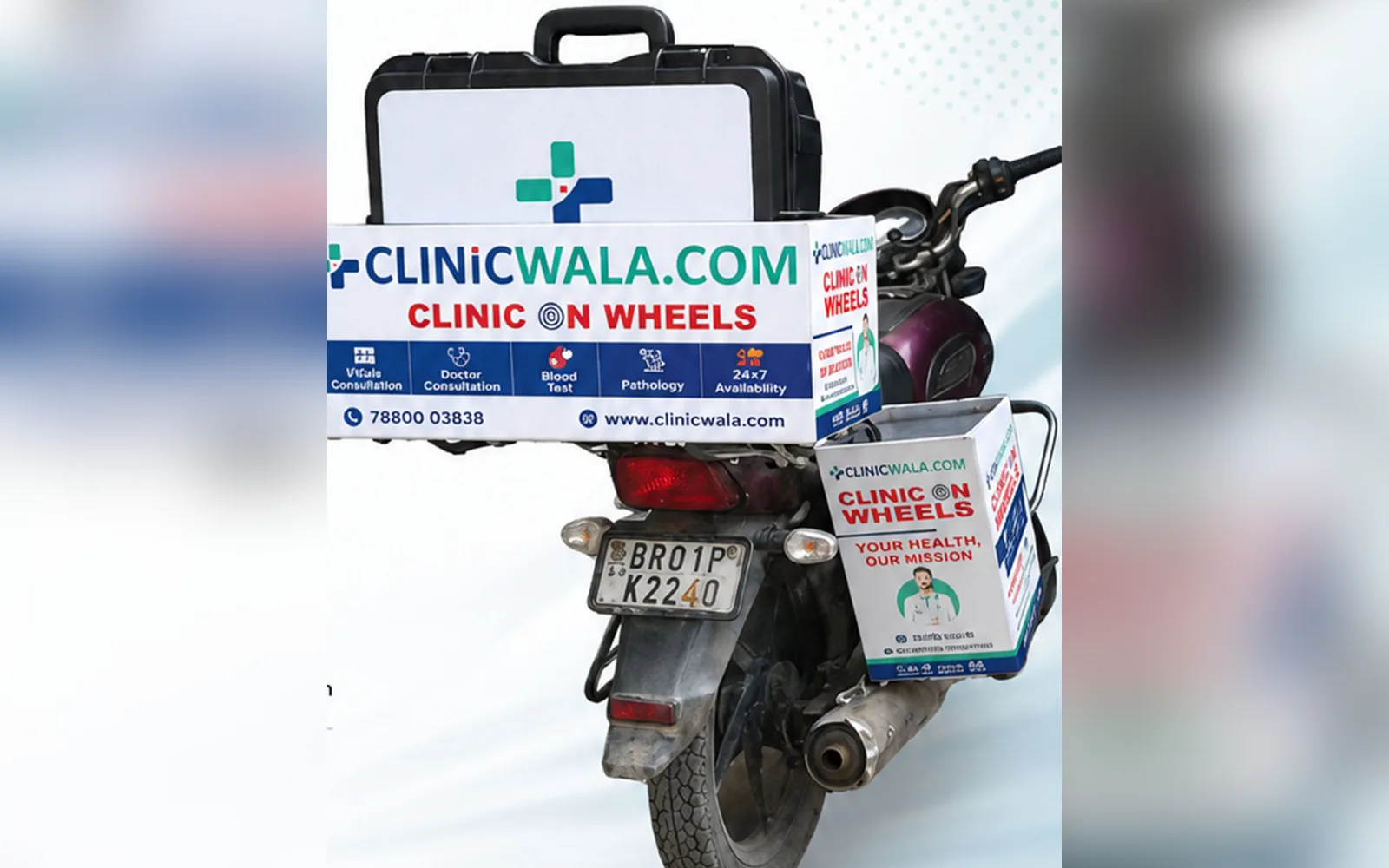
Some communities are too small or too scattered for a fixed clinic to make sense. The Clinic on Wheels answers with a schedule instead of a building: an agile mobile unit, built for difficult terrain, that brings the same diagnostics and doctor access to a different settlement each day and comes back on a known date.
It is staffed by a telemedicine operator and a health worker, with doctors consulting remotely over live readings — and every patient it screens keeps a digital record the next visit picks up from.
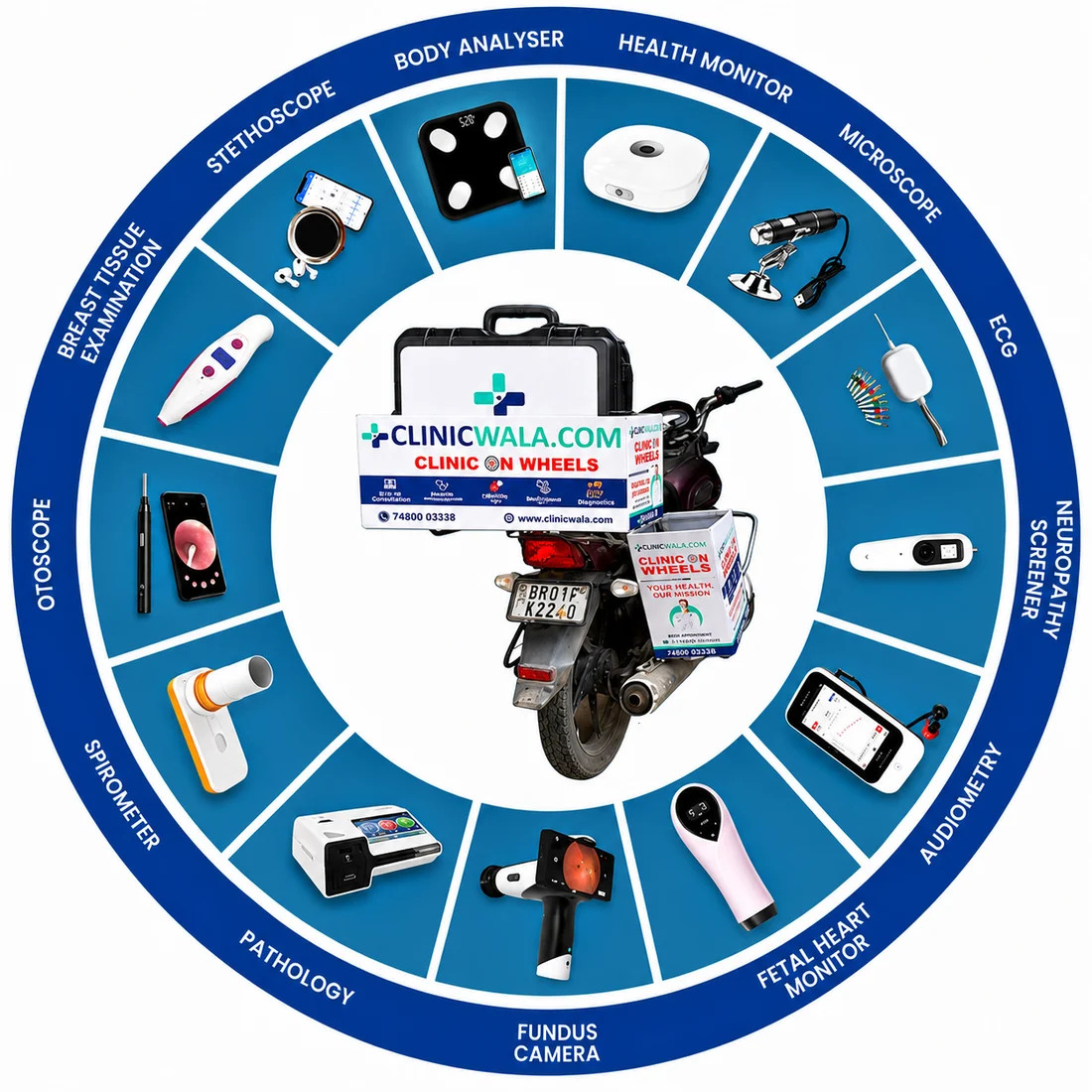
What the unit carries
The core kit, configured per programme:
Vitals and body composition
Multi-parameter monitor, body analyser, thermometer — the baseline every visit starts with.
Cardiac and respiratory
12-lead ECG, digital stethoscope and spirometer, for the heart and lung conditions rural and mining areas carry most.
Blood markers at the roadside
Glucometer and haemoglobin meter — diabetes and anaemia answered in the same sitting.
Examination instruments
Otoscope and neuropathy screener, with fetal heart monitoring for maternal care.
The connected backbone
Tablet, printer, power backup and internet — every reading syncs to the platform, every patient leaves with a report.
Awareness and guidance
Health awareness and counselling, medicine guidance and referrals travel with the unit — a stop is a health visit, not just a test.
How a stop works
- 01
The route is announced
Villages know the date in advance, through local partners and health workers.
- 02
Screening at the vehicle
Registration, vitals, and the tests the programme covers — most take under 90 seconds each.
- 03
A doctor joins by video
Cases that need a consultation get one on the spot, with the readings already in front of the doctor.
- 04
Referral where needed
Patients needing a hospital leave with a prior appointment and guidance to schemes that cover them.
- 05
The record stays
Findings, prescriptions and reports land in the patient’s record — the next visit continues, not restarts.
The cum-Ambulance variant
A variant of the unit converts for emergency medical transport, extending screening camps into disaster response and medical emergencies — the same vehicle that screens a village on Tuesday can evacuate a patient on Wednesday.
The other two vehicles