
The fetal heart monitor is a highly sensitive handheld ultrasound doppler. It detects the fetal heartbeat — the sound and the fetal heart rate (FHR) — from as early as the twelfth week of pregnancy, and plays it through a built-in speaker or headphones so outside noise does not intrude on a quiet sound.
At a ClinicWala e-clinic it is one instrument in the antenatal check. The TFT screen shows the heart rate, waveform, volume and battery level, and the reading goes to the consulting doctor to interpret alongside proper antenatal care. The device reports what it hears; it does not predict or promise anything about a pregnancy.
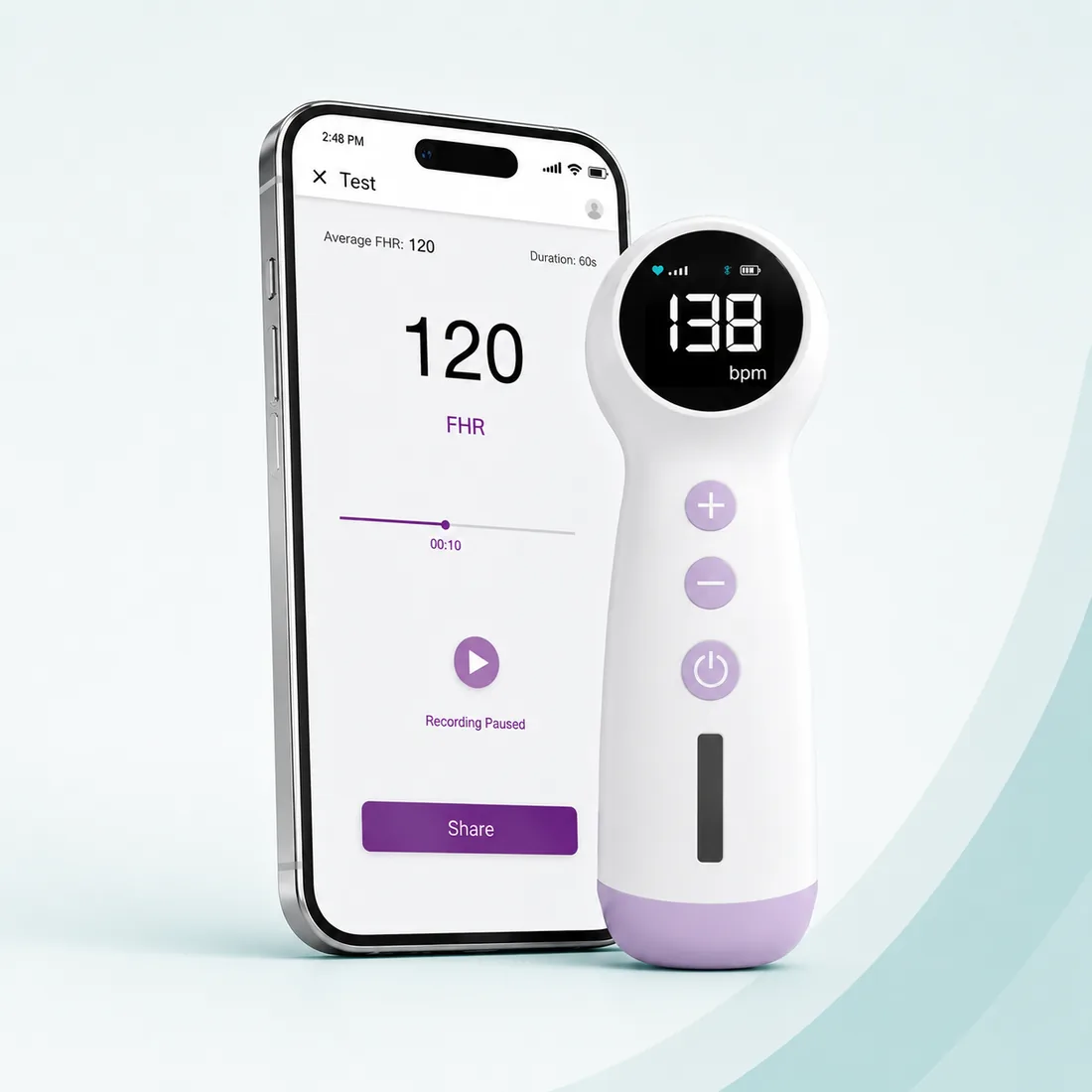
What the device does
Sensitive enough to hear early
A 110 dB ultrasonic sensitivity and a 2.5 MHz probe pick up the fetal heartbeat from around week 12 of pregnancy.
A screen that explains itself
The high-resolution TFT display shows the FHR in clear digits, plus the waveform, volume level and battery level.
Speaker or headphones
Listen on the built-in speaker or plug in headphones through the jack. The whole device works from three buttons.
Rechargeable and undemanding
A USB-rechargeable lithium-ion battery, automatic power-off after two minutes of inactivity, and IPx1 water-resistance protection.
A reading, step by step
- 01
Switch on
One press of the on/off button wakes the device; the TFT display lights up and shows the battery status.
- 02
Gel and place the probe
The probe sits face-down on the abdomen with ultrasound gel — skin contact through the gel is what gives a precise fetal heart rate.
- 03
Listen and read
The heartbeat plays through the speaker or headphones while the screen shows the rate and waveform for the doctor.
- 04
Stow the probe
After the check, the probe clips securely into its side holder. Left idle for two minutes, the device switches itself off.