
Cataract Surgery
₹15,000 – ₹1,40,000 · typically ₹60,000
Cataract surgery uses an artificial intraocular lens (IOL) to replace a clouded lens (cataract) in the eye. Cataract surgery restores vision that has been compromised by cataracts.
Common questions
What is cataract surgery?
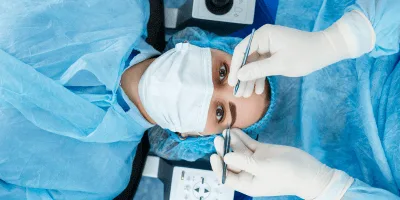
The clouding of the eye's natural lens is referred to as a cataract, and cataract surgery is a popular surgical technique used to correct it. An artificial lens known as an intraocular lens (IOL) is used to replace the clouded lens after surgery. Cataract surgery is normally carried out as an outpatient operation and is regarded as a secure and reliable technique.
How does cataract surgery work?
You will be given local anaesthesia in the form of eye drops or an injection around the eye prior to the procedure. This numbs the area and aids in keeping you at ease while the treatment is being done. When performing phacoemulsification, the surgeon often makes a tiny incision on the eye's surface. To do this, a tiny hole must be made to gain access to the cataract.The surgeon carefully removes the little pieces of the clouded lens from the eye by breaking them up into smaller pieces with an ultrasound probe. Emulsification is the name given to this process.The surgeon uses the same incision to install a folded IOL once the cataract has been removed.Once the IOL is in the right position, the incision can either be stitched up or left to heal naturally.
What are the different types of intraocular lenses (IOLs) used in cataract surgery?
There are several different types of intraocular lenses (IOLs) used in cataract surgery. Monofocal IOLs, Multifocal IOLs, Toric IOLs,Extended Depth of Focus (EDOF) IOLs.
What are the risks and complications of cataract surgery?
The majority of the time, cataract surgery is regarded as a risk-free and successful technique, but there are some dangers and potential adverse effects. The following are some dangers and issues connected to cataract surgery:
Secondary cataract (Posterior Capsule Opacification), Infection, Swelling and Inflammation, Bleeding, Increased Intraocular Pressure, Dislocated or Misplaced Intraocular Lens (IOL), Retinal Detachment
Secondary cataract (Posterior Capsule Opacification), Infection, Swelling and Inflammation, Bleeding, Increased Intraocular Pressure, Dislocated or Misplaced Intraocular Lens (IOL), Retinal Detachment
Can cataract surgery correct near vision problems (presbyopia)?
Presbyopia, nearsightedness, and other refractive vision issues can be treated with replacement lenses implanted after cataract surgery. Presbyopia is a typical age-related disorder where the eye's natural lens loses its capacity to focus on close objects, making it challenging to do close-up tasks like reading or seeing details.
What are the benefits of cataract surgery?
Cataract surgery offers several benefits for individuals with cataracts, including: Improved Vision, Enhanced Quality of Life, Reduced Dependency on Glasses, Treatment of Other Eye Conditions.